
Digital Marketing Trends in 2026: What Businesses Need to Know
Digital marketing continues to evolve rapidly, driven by advancements in technology, changing consumer behavior, and the growing influence of artificial intelligence. Businesses that stay ahead of emerging trends can gain a competitive advantage, improve customer engagement, and increase revenue.
As we move through 2026, marketers must adapt to new strategies and tools that are reshaping the digital landscape. From AI-powered advertising to personalized customer experiences, these trends are defining the future of marketing.
In this article, we’ll explore the most important digital marketing trends in 2026 and how businesses can leverage them for growth.
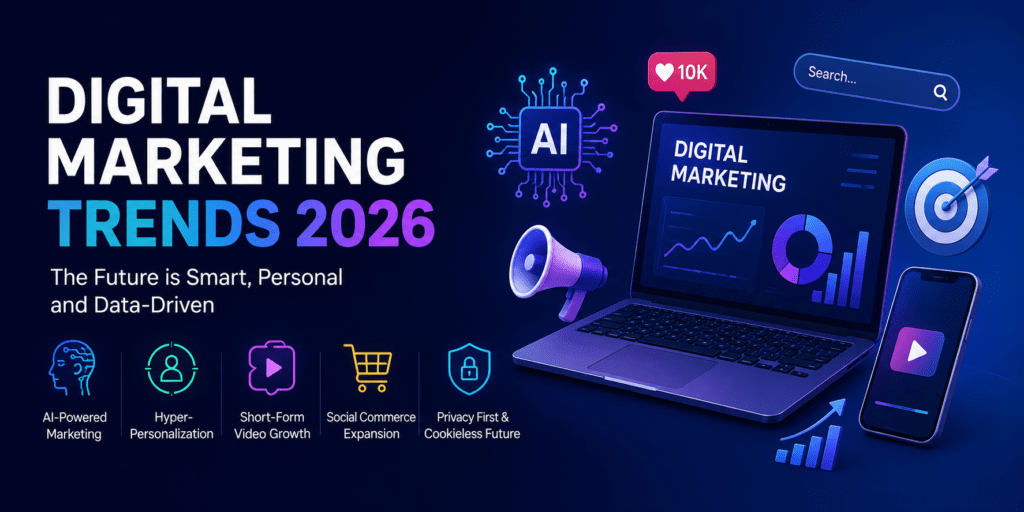
1. Artificial Intelligence Becomes a Core Marketing Tool
Artificial Intelligence (AI) is no longer just a buzzword. In 2026, AI plays a critical role in content creation, audience targeting, campaign optimization, customer support, and data analysis.
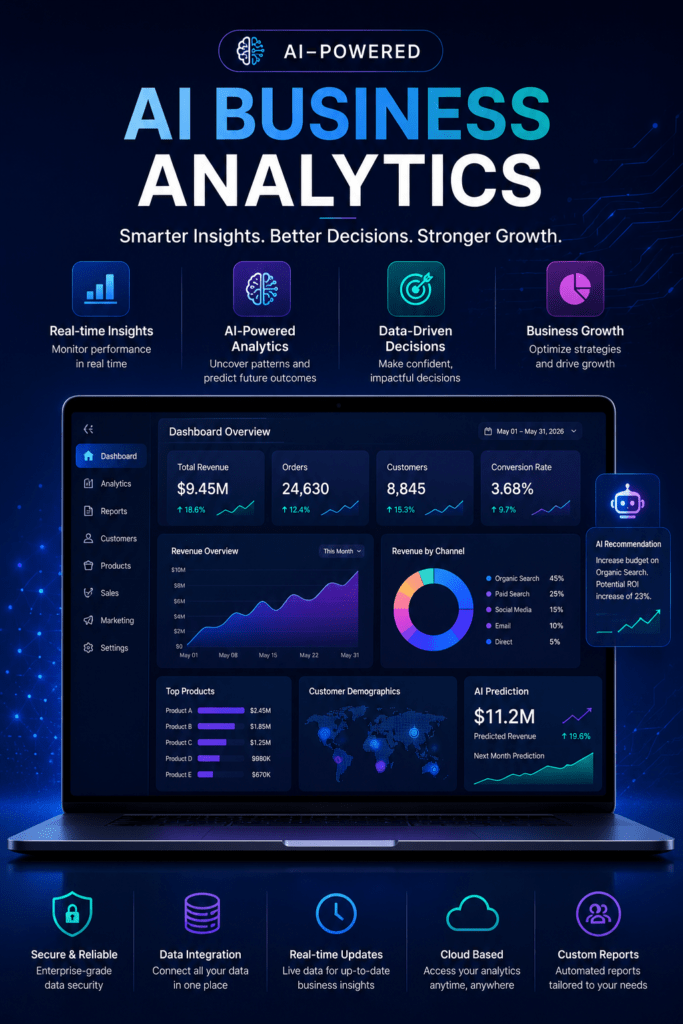
Marketers are using AI-powered tools to generate content ideas, automate repetitive tasks, analyze consumer behavior, and improve advertising performance. AI helps businesses save time while making smarter marketing decisions.
Companies that integrate AI into their marketing strategy can improve efficiency and deliver more personalized customer experiences.
3. Video Marketing Continues to Dominate
Video remains one of the most powerful forms of digital content. Short-form videos on platforms like Instagram Reels, YouTube Shorts, and TikTok continue to attract massive audiences.
Businesses are investing more in educational videos, product demonstrations, customer testimonials, and behind-the-scenes content.
Video marketing helps brands communicate information quickly while increasing engagement and brand awareness.
4. Voice Search Optimization Gains Importance
With the growing popularity of smart speakers and voice assistants, voice search is becoming a significant part of online search behavior.
Consumers increasingly use voice commands to search for products, services, and information. As a result, businesses need to optimize their websites for conversational search queries and long-tail keywords.
Voice search optimization can improve visibility and help brands capture new audiences.

5. First-Party Data Becomes More Valuable
Privacy regulations and the decline of third-party cookies are changing how businesses collect customer data.
In 2026, marketers are focusing on first-party data gathered directly from customers through websites, email subscriptions, surveys, and loyalty programs.
This data is more reliable, privacy-friendly, and valuable for creating personalized marketing campaigns.
Businesses that build strong first-party data strategies will have a significant advantage in the future.
6. Social Commerce Continues to Grow
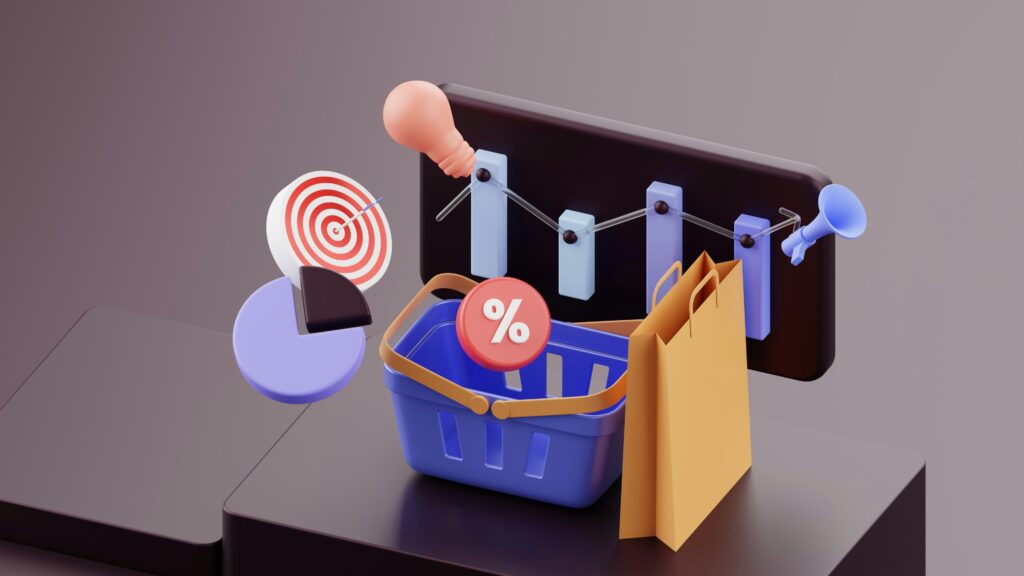
Social media platforms are becoming powerful sales channels.
Consumers can now discover, research, and purchase products directly within social media apps. Platforms like Instagram, Facebook, and TikTok continue expanding their shopping features.
Businesses are increasingly integrating eCommerce with social media to reduce friction in the buying process and improve customer convenience.
7. AI-Powered Advertising Improves Performance

Advertising platforms such as Google Ads and Meta Ads are relying more heavily on machine learning and automation.
Features like automated bidding, predictive targeting, and Performance Max campaigns help advertisers optimize campaigns more efficiently.
AI-powered advertising enables businesses to reach the right audience while maximizing return on investment.
8. SEO Focuses More on User Experience
Search engines are becoming smarter at evaluating website quality and user satisfaction.
In addition to keywords and backlinks, factors such as page speed, mobile responsiveness, content quality, and user engagement are becoming increasingly important.
Businesses that prioritize user experience will be more likely to achieve higher search engine rankings and better organic traffic.
9. Influencer Marketing Evolves
Influencer marketing continues to be effective, but brands are shifting toward micro-influencers and niche creators.
Smaller influencers often have highly engaged audiences and stronger relationships with their followers, leading to better trust and authenticity.
Businesses are focusing on long-term partnerships rather than one-time promotions to maximize results.

10. Marketing Automation Becomes Essential
Marketing automation tools help businesses streamline email marketing, lead nurturing, customer follow-ups, and campaign management.
Automation improves efficiency while ensuring customers receive timely and relevant communication.
As competition increases, businesses that automate repetitive processes can focus more on strategy and growth.
Conclusion
Digital marketing in 2026 is driven by innovation, personalization, automation, and customer-centric strategies. Businesses that embrace AI, video content, data-driven marketing, and advanced advertising technologies will be better positioned for success.
The digital landscape will continue evolving, making it essential for businesses to stay informed and adapt quickly. By leveraging these emerging trends, brands can improve customer engagement, generate more leads, and achieve sustainable growth in an increasingly competitive marketplace.

1. What is the biggest digital marketing trend in 2026?
Artificial Intelligence (AI) is considered one of the most influential digital marketing trends in 2026 due to its impact on content creation, advertising, and customer personalization.
2. Why is personalization important in digital marketing?
Personalization helps businesses deliver relevant content and offers, improving customer engagement, satisfaction, and conversion rates.
3. Is video marketing still effective in 2026?
Yes. Video marketing remains one of the most engaging and effective ways to attract audiences and communicate brand messages.
4. How does AI improve digital marketing?
AI helps automate tasks, analyze customer data, optimize campaigns, improve targeting, and create personalized experiences.
5. What is social commerce?
Social commerce refers to selling products directly through social media platforms such as Instagram, Facebook, and TikTok.
6. Why is first-party data important?
First-party data is collected directly from customers and provides valuable insights while complying with evolving privacy regulations.
7. How can businesses prepare for future digital marketing trends?
Businesses should invest in AI tools, improve customer experiences, embrace automation, create high-quality content, and continuously adapt to industry changes.
8. Which digital marketing strategy offers the best ROI in 2026?
The best ROI often comes from a combination of SEO, Google Ads, content marketing, email marketing, and personalized customer experiences.