
Uncategorized
Artificial Intelligence Search Engine Optimization: The Complete Guide to AI-Powered SEO – Copy
Artificial Intelliegence Search Engine Optimization Artificial Intelligence Search Engine OptimizationIn today’s digital world, businesses are always looking for new ways to boost their online presence.One significant shift in the SEO industry is the integration of artificial intelligence.AI is changing how search engines understand content, how users search for information, and how marketers optimize websites.Instead of relying solely on traditional SEO methods, businesses now use AI-driven tools to improve rankings, drive traffic, and deliver better user experiences. Artificial Intelligence Search Engine Optimization blends artificial intelligence with tested SEO strategies to make optimization more efficient, intelligent, and effective.AI can process large data sets, find keyword opportunities, optimize content, predict search trends, and automate routine tasks.As Google continues to refine its algorithms, AI has become a key component of every successful SEO strategy. What is Artificial Intelliegence Search Engine Optimization? Artificial Intelligence Search Engine Optimization refers to using AI technologies to boost a website’s visibility in search engine results.AI tools help marketers perform keyword research, content optimization, competitor analysis, technical SEO audits, and performance tracking with greater accuracy than manual methods. Instead of making educated guesses about user needs, Artificial Intelligence Search Engine Optimization analyzes search intent, user behavior, and ranking signals to suggest the most effective optimization strategies. Why Artificial Intelligence is Changing SEO The SEO landscape has undergone major changes in recent years.Google’s AI-powered algorithms now focus more on understanding user intent than on matching exact keywords.This means websites must produce valuable, relevant, and high-quality content. With Artificial Intelligence Search Engine Optimization, businesses can: * Quickly discover high-value keywords.* Analyze competitors in minutes.* Improve content readability.* Automatically optimize metadata.* Identify technical SEO issues.* Predict ranking opportunities.* Understand user search intent. These benefits make Artificial Intelligence Search Engine Optimization a key strategy for businesses aiming for long-term organic growth. Smarter Keyword Research Keyword research is the foundation of SEO.Artificial Intelligence Search Engine Optimization tools analyze millions of search queries and suggest keywords with high ranking potential.They also identify long-tail and semantic keywords, as well as user intent, helping businesses target the right audience. Better Content Optimization Creating quality content is easier with Artificial Intelligence Search Engine Optimization.AI tools recommend headings, keyword placement, readability improvements, internal links, and content structure.This helps content rank higher while still being useful for readers. Faster Technical SEO Audits Technical SEO can be complex, but Artificial Intelligence Search Engine Optimization simplifies the process by automatically detecting crawl errors, broken links, duplicate content, page speed issues, missing meta tags, and indexing problems. Improved User Experience Search engines prioritize websites that offer great user experiences.Artificial Intelligence Search Engine Optimization examines user behavior, bounce rates, page engagement, and navigation patterns to suggest improvements that enhance visitor satisfaction. Artificial Intelliegence Tools Used in SEO Several AI-powered tools support Artificial Intelligence Search Engine Optimization, including: ChatGPT Surfer SEO Jasper AI SEMrushAhrefs Frase MarketMuse Google GeminiThese tools help marketers save time while improving SEO performance. How Artificial Intelligence Helps Content Marketing Content marketing and Artificial Intelligence Search Engine Optimization work hand in hand to achieve better results.AI assists in: Blog topic generation Content outlinesWriting SEO-friendly contentCreating meta titles and descriptions Optimizing imagesGenerating FAQs Updating content However, human creativity remains essential.AI-generated content should always be reviewed, edited, and refined before being published. Artificial Intelliegence and Google’s Search Algorithms Google increasingly relies on AI to understand webpages.Algorithms now assess context, expertise, authority, and helpfulness rather than just keyword density. As a result, Artificial Intelligence Search Engine Optimization focuses on creating content that genuinely answers user questions instead of keyword stuffing. Businesses that use Artificial Intelligence Search Engine Optimization are more likely to align with Google’s evolving ranking factors. Best Practices for Artificial Intelliegence Search Engine Optimization To get the best results, follow these practices: Create original and valuable content. Focus on user intent. Optimize page speed. Use descriptive headings. Build high-quality backlinks. Improve mobile responsiveness. Update old content regularly. Monitor performance with analytics. Use AI tools as assistants, not replacements. Always review AI-generated content manually. These practices strengthen any Artificial Intelligence Search Engine Optimization strategy. Challenges of Artificial Intelligence Search Engine Optimization Although AI offers many benefits, it also has its limitations. Some challenges include: AI may generate inaccurate information. Over-reliance on automation can reduce content originality. Human editing is still necessary. Search engine algorithms change frequently. AI cannot fully replace experience and creativity. The best approach is combining human expertise with Artificial Intelligence Search Engine Optimization tools. The Future of Artificial Intelligence Search Engine Optimization The future of SEO will be increasingly influenced by AI.Voice search, visual search, predictive analytics, and personalized search experiences will continue to grow.Businesses that adopt Artificial Intelligence Search Engine Optimization today will be better prepared for future algorithm updates and shifting consumer behavior. As AI technology advances, marketers will spend less time on repetitive tasks and more time developing creative strategies that deliver real business results. Conclusion Artificial Intelligence Search Engine Optimization is transforming how businesses approach digital marketing.From keyword research and content optimization to technical SEO and user experience, AI makes every stage of SEO more efficient and data-driven.While AI cannot replace human creativity and strategic thinking, it significantly improves productivity and decision-making. Companies that combine AI-powered tools with high-quality content, ethical SEO practices, and user-focused strategies will gain a strong competitive edge.Investing in Artificial Intelligence Search Engine Optimization today is not just about improving rankings—it’s about building a smarter, more sustainable online presence for the future.
Instagram Advertising Strategies That Drive Sales
Instagram Advertising Strategies That Drive Sales Instagram has evolved from a photo-sharing platform into one of the most powerful marketing channels for businesses. With billions of active users and highly engaging content formats, Instagram offers brands an incredible opportunity to reach potential customers, build relationships, and drive sales. However, simply running ads is not enough. To achieve profitable results, businesses need a well-planned Instagram advertising strategy that focuses on targeting, creativity, and conversion optimization. In this guide, we’ll explore the most effective Instagram advertising strategies that can help businesses generate leads, increase sales, and maximize return on investment (ROI). Why Instagram Advertising Matters Instagram is one of the most visually engaging social media platforms. Consumers use Instagram not only to connect with friends but also to discover new brands, products, and services. With advanced targeting capabilities provided by Meta Ads, businesses can reach specific audiences based on demographics, interests, behaviors, and purchase intent. This makes Instagram advertising a valuable tool for businesses looking to grow their customer base and increase revenue. 1. Define Clear Advertising Goals Before launching an Instagram campaign, it’s essential to define your objectives. Common goals include: Brand awareness Website traffic Lead generation App downloads Product sales Customer engagement Having a clear objective helps you choose the right campaign type and measure success more effectively. 2. Know Your Target Audience One of the biggest reasons Instagram campaigns fail is poor audience targeting. Businesses should analyze their ideal customers based on: Age Gender Location Interests Online behavior Purchasing habits Meta’s audience targeting tools allow advertisers to reach highly relevant users who are more likely to convert into customers. 3. Use High-Quality Visual Content Instagram is a visual platform, so the quality of your creatives plays a significant role in campaign performance. Use: Professional product photos Lifestyle images Short-form videos Reels Customer testimonials User-generated content Eye-catching visuals help stop users from scrolling and encourage them to engage with your advertisement. 4. Leverage Instagram Reels Ads Short-form video content continues to dominate social media. Instagram Reels Ads allow businesses to showcase products, demonstrate features, and tell compelling brand stories in an engaging format. Reels often receive higher engagement rates than traditional image ads, making them an effective tool for increasing reach and sales. 5. Create Compelling Ad Copy Even the best visuals need strong messaging. Your ad copy should: Address customer pain points Highlight key benefits Create urgency Include a clear call-to-action (CTA) Examples include: Shop Now Learn More Get Started Book a Consultation Clear and persuasive copy helps guide users toward taking action. 6. Utilize Retargeting Campaigns Most users do not make a purchase the first time they interact with your brand. Retargeting allows businesses to show ads to people who have: Visited the website Viewed products Added items to their cart Engaged with Instagram content Retargeting campaigns often produce higher conversion rates because they target warm audiences already familiar with your business. 7. Optimize Landing Pages Your Instagram ad is only the first step. Once users click the ad, they should arrive at a fast, mobile-friendly, and conversion-focused landing page. A high-performing landing page should include: Clear headlines Strong value propositions Customer reviews Easy navigation Simple contact forms Prominent call-to-action buttons A seamless user experience significantly improves conversion rates. 8. Use Social Proof to Build Trust Consumers trust recommendations from other customers more than traditional advertising. Include: Customer testimonials Reviews Ratings Case studies User-generated content Social proof builds credibility and reduces hesitation during the buying process. 9. Test Multiple Ad Variations Successful advertisers continuously test different ad elements. Experiment with: Headlines Images Videos Audience segments Call-to-action buttons A/B testing helps identify which combinations deliver the best results and highest return on investment. 10. Monitor and Optimize Performance Regular campaign monitoring is essential for long-term success. Key metrics to track include: Reach Impressions Click-through rate (CTR) Cost per click (CPC) Conversion rate Return on ad spend (ROAS) Analyzing performance data allows businesses to make informed decisions and improve campaign profitability. Conclusion Instagram advertising has become an essential growth channel for businesses looking to increase visibility, generate leads, and drive sales. However, success requires more than simply boosting posts. By defining clear goals, targeting the right audience, creating compelling content, leveraging retargeting, and continuously optimizing campaigns, businesses can maximize their advertising investment and achieve sustainable growth. When combined with strong landing pages and data-driven decision-making, Instagram Ads can become one of the most profitable marketing channels for your business. 1. Are Instagram Ads effective for small businesses? Yes. Instagram Ads offer advanced targeting and flexible budgets, making them highly effective for small businesses. 2. How much should I spend on Instagram Ads? The budget depends on your goals, industry, and competition. Many businesses start with a small budget and scale based on performance. 3. What type of Instagram Ads perform best? Reels Ads, Carousel Ads, and Video Ads often deliver strong engagement and conversion rates. 4. How can I improve Instagram Ad conversions? Use compelling creatives, clear CTAs, optimized landing pages, and retargeting campaigns to improve conversions. 5. What is Instagram retargeting? Retargeting involves showing ads to users who have previously interacted with your website, products, or Instagram profile. 6. How long does it take to see results from Instagram Ads? Many businesses start seeing engagement and traffic within a few days, while conversion-focused campaigns may take longer to optimize. 7. Are Instagram Ads better than Facebook Ads? Both platforms are effective. The best choice depends on your target audience, business goals, and marketing strategy. 8. How do I measure Instagram Ad success? Track metrics such as CTR, CPC, conversions, leads, sales, and ROAS to evaluate campaign performance. Yes. Instagram Ads offer advanced targeting and flexible budgets, making them highly effective for small businesses. The budget depends on your goals, industry, and competition. Many businesses start with a small budget and scale based on performance. Reels Ads, Carousel Ads, and Video Ads often deliver strong engagement and conversion rates. Use compelling creatives, clear CTAs, optimized landing
Digital Marketing Trends in 2026
Digital Marketing Trends in 2026: What Businesses Need to Know Digital marketing continues to evolve rapidly, driven by advancements in technology, changing consumer behavior, and the growing influence of artificial intelligence. Businesses that stay ahead of emerging trends can gain a competitive advantage, improve customer engagement, and increase revenue. As we move through 2026, marketers must adapt to new strategies and tools that are reshaping the digital landscape. From AI-powered advertising to personalized customer experiences, these trends are defining the future of marketing. In this article, we’ll explore the most important digital marketing trends in 2026 and how businesses can leverage them for growth. 1. Artificial Intelligence Becomes a Core Marketing Tool Artificial Intelligence (AI) is no longer just a buzzword. In 2026, AI plays a critical role in content creation, audience targeting, campaign optimization, customer support, and data analysis. Marketers are using AI-powered tools to generate content ideas, automate repetitive tasks, analyze consumer behavior, and improve advertising performance. AI helps businesses save time while making smarter marketing decisions. Companies that integrate AI into their marketing strategy can improve efficiency and deliver more personalized customer experiences. 3. Video Marketing Continues to Dominate Video remains one of the most powerful forms of digital content. Short-form videos on platforms like Instagram Reels, YouTube Shorts, and TikTok continue to attract massive audiences. Businesses are investing more in educational videos, product demonstrations, customer testimonials, and behind-the-scenes content. Video marketing helps brands communicate information quickly while increasing engagement and brand awareness. 4. Voice Search Optimization Gains Importance With the growing popularity of smart speakers and voice assistants, voice search is becoming a significant part of online search behavior. Consumers increasingly use voice commands to search for products, services, and information. As a result, businesses need to optimize their websites for conversational search queries and long-tail keywords. Voice search optimization can improve visibility and help brands capture new audiences. 5. First-Party Data Becomes More Valuable Privacy regulations and the decline of third-party cookies are changing how businesses collect customer data. In 2026, marketers are focusing on first-party data gathered directly from customers through websites, email subscriptions, surveys, and loyalty programs. This data is more reliable, privacy-friendly, and valuable for creating personalized marketing campaigns. Businesses that build strong first-party data strategies will have a significant advantage in the future. 6. Social Commerce Continues to Grow Social media platforms are becoming powerful sales channels. Consumers can now discover, research, and purchase products directly within social media apps. Platforms like Instagram, Facebook, and TikTok continue expanding their shopping features. Businesses are increasingly integrating eCommerce with social media to reduce friction in the buying process and improve customer convenience. 7. AI-Powered Advertising Improves Performance Advertising platforms such as Google Ads and Meta Ads are relying more heavily on machine learning and automation. Features like automated bidding, predictive targeting, and Performance Max campaigns help advertisers optimize campaigns more efficiently. AI-powered advertising enables businesses to reach the right audience while maximizing return on investment. 8. SEO Focuses More on User Experience Search engines are becoming smarter at evaluating website quality and user satisfaction. In addition to keywords and backlinks, factors such as page speed, mobile responsiveness, content quality, and user engagement are becoming increasingly important. Businesses that prioritize user experience will be more likely to achieve higher search engine rankings and better organic traffic. 9. Influencer Marketing Evolves Influencer marketing continues to be effective, but brands are shifting toward micro-influencers and niche creators. Smaller influencers often have highly engaged audiences and stronger relationships with their followers, leading to better trust and authenticity. Businesses are focusing on long-term partnerships rather than one-time promotions to maximize results. 10. Marketing Automation Becomes Essential Marketing automation tools help businesses streamline email marketing, lead nurturing, customer follow-ups, and campaign management. Automation improves efficiency while ensuring customers receive timely and relevant communication. As competition increases, businesses that automate repetitive processes can focus more on strategy and growth. Conclusion Digital marketing in 2026 is driven by innovation, personalization, automation, and customer-centric strategies. Businesses that embrace AI, video content, data-driven marketing, and advanced advertising technologies will be better positioned for success. The digital landscape will continue evolving, making it essential for businesses to stay informed and adapt quickly. By leveraging these emerging trends, brands can improve customer engagement, generate more leads, and achieve sustainable growth in an increasingly competitive marketplace. 1. What is the biggest digital marketing trend in 2026? Artificial Intelligence (AI) is considered one of the most influential digital marketing trends in 2026 due to its impact on content creation, advertising, and customer personalization. 2. Why is personalization important in digital marketing? Personalization helps businesses deliver relevant content and offers, improving customer engagement, satisfaction, and conversion rates. 3. Is video marketing still effective in 2026? Yes. Video marketing remains one of the most engaging and effective ways to attract audiences and communicate brand messages. 4. How does AI improve digital marketing? AI helps automate tasks, analyze customer data, optimize campaigns, improve targeting, and create personalized experiences. 5. What is social commerce? Social commerce refers to selling products directly through social media platforms such as Instagram, Facebook, and TikTok. 6. Why is first-party data important? First-party data is collected directly from customers and provides valuable insights while complying with evolving privacy regulations. 7. How can businesses prepare for future digital marketing trends? Businesses should invest in AI tools, improve customer experiences, embrace automation, create high-quality content, and continuously adapt to industry changes. 8. Which digital marketing strategy offers the best ROI in 2026? The best ROI often comes from a combination of SEO, Google Ads, content marketing, email marketing, and personalized customer experiences. Artificial Intelligence (AI) is considered one of the most influential digital marketing trends in 2026 due to its impact on content creation, advertising, and customer personalization. Personalization helps businesses deliver relevant content and offers, improving customer engagement, satisfaction, and conversion rates. Yes. Video marketing remains one of the most engaging and effective ways to attract audiences and communicate brand messages. AI
What Is Google Ads and How Does It Help Businesses Grow?
What Is Google Ads and How Does It Help Businesses Grow? In today’s competitive digital landscape, businesses need effective ways to reach potential customers online. While organic marketing strategies such as Search Engine Optimization (SEO) are valuable, they often take time to deliver results. Businesses looking for faster visibility and immediate customer acquisition frequently turn to Google Ads. Google Ads is one of the world’s most powerful online advertising platforms. It allows businesses to display ads on Google Search, YouTube, Google Maps, Gmail, and millions of partner websites. Whether you’re a startup, local business, or established company, Google Ads can help you generate leads, increase website traffic, and drive sales. What Is Google Ads? Google Ads is Google’s pay-per-click (PPC) advertising platform that enables businesses to promote their products and services to people actively searching online. When users search for keywords related to your business, your ads can appear at the top of Google’s search results. For example, if someone searches for “digital marketing agency near me,” businesses running Google Ads campaigns may appear before the organic search results. This gives companies an opportunity to connect with potential customers exactly when they are looking for a solution. How Does Google Ads Work? Google Ads works through a bidding system. Businesses select keywords related to their products or services and create advertisements targeting those keywords. When someone searches for a relevant term, Google evaluates several factors, including: Keyword relevance Ad quality Landing page experience Bid amount Google then decides which ads appear and in what order. Advertisers only pay when a user clicks on their ad, which is why Google Ads is commonly known as a Pay-Per-Click (PPC) advertising platform. Benefits of Google Ads for Business Growth 1. Instant Online Visibility Unlike SEO, which can take months to show results, Google Ads can place your business at the top of search results almost immediately after launching a campaign. This instant visibility helps businesses attract customers faster and gain a competitive advantage. 2. Reach High-Intent Customers One of the biggest advantages of Google Ads is that it targets users who are actively searching for products or services. These users already have buying intent, making them more likely to convert into customers compared to traditional advertising audiences. 3. Increase Website Traffic Google Ads drives qualified visitors to your website. Since the traffic comes from people searching for relevant keywords, the chances of engagement and conversion are significantly higher. This targeted traffic can help businesses generate consistent growth. 4. Generate More Leads and Sales Businesses can use Google Ads to encourage valuable actions such as: Phone calls Contact form submissions Appointment bookings Product purchases Service inquiries 5. Flexible Budget Management Google Ads allows businesses to set daily and monthly budgets according to their goals. Whether you have a small advertising budget or a large marketing investment, you remain in complete control of your spending and campaign performance. By targeting the right audience at the right time, businesses can maximize their return on investment and achieve sustainable long-term growth. 6. Advanced Audience Targeting Google Ads offers precise targeting options, including: Geographic locations Age groups Interests Devices Search behavior This ensures your advertisements reach the most relevant audience, maximizing return on investment. By showing ads only to users who are most likely to be interested in your products or services, businesses can reduce wasted ad spend and improve campaign performance. 7. Track and Measure Results One of the greatest strengths of Google Ads is transparency. Businesses can track important metrics such as: Clicks Impressions Conversion rates Cost per click (CPC) Cost per lead (CPL) Return on ad spend (ROAS) Types of Google Ads Campaigns Search Ads Text advertisements that appear on Google’s search engine results pages when users search for specific keywords Display Ads Display Ads appear on millions of websites, apps, and online platforms across the Google Display Network. Shopping Ads Product-based ads designed for eCommerce businesses to showcase products directly in search results. Video Ads Advertisements that appear on YouTube before, during, or after videos. Why Every Business Should Consider Google Ads Consumers rely heavily on Google to find products, services, and solutions. If your business isn’t visible when potential customers are searching, you’re likely losing opportunities to competitors. Google Ads allows businesses to appear at the right place, at the right time, in front of the right audience. Combined with a professional website and optimized landing pages, it can significantly improve lead generation, customer acquisition, and overall business growth. Conclusion Google Ads is one of the most effective digital marketing tools available today. It helps businesses increase visibility, attract qualified traffic, generate leads, and drive sales Whether you’re a local business looking for more inquiries or an established brand aiming to scale, Google Ads offers measurable results and flexible advertising solutions. quickly. Whether you’re a local business looking for more inquiries or an established brand aiming to scale, Google Ads offers measurable results and flexible advertising solutions. With the right strategy and ongoing optimization, it can become one of the most profitable marketing channels for your business. 1. What is Google Ads? Google Ads is Google’s online advertising platform that allows businesses to display paid advertisements across Google Search, YouTube, Google Maps, Gmail, and partner websites. 2. How much does Google Ads cost? There is no fixed cost. Businesses can set their own daily or monthly budgets based on their goals and competition level. 3. Is Google Ads suitable for small businesses? Yes. Google Ads is highly effective for small businesses because it offers targeted advertising and flexible budget control. 4. How quickly can I get results from Google Ads? Most campaigns can begin generating traffic, leads, and conversions within days of launching. 5. What is PPC advertising? PPC stands for Pay-Per-Click, meaning advertisers only pay when someone clicks on their advertisement. Google Ads is Google’s online advertising platform that allows businesses to display paid advertisements across Google Search, YouTube, Google Maps, Gmail, and partner websites.
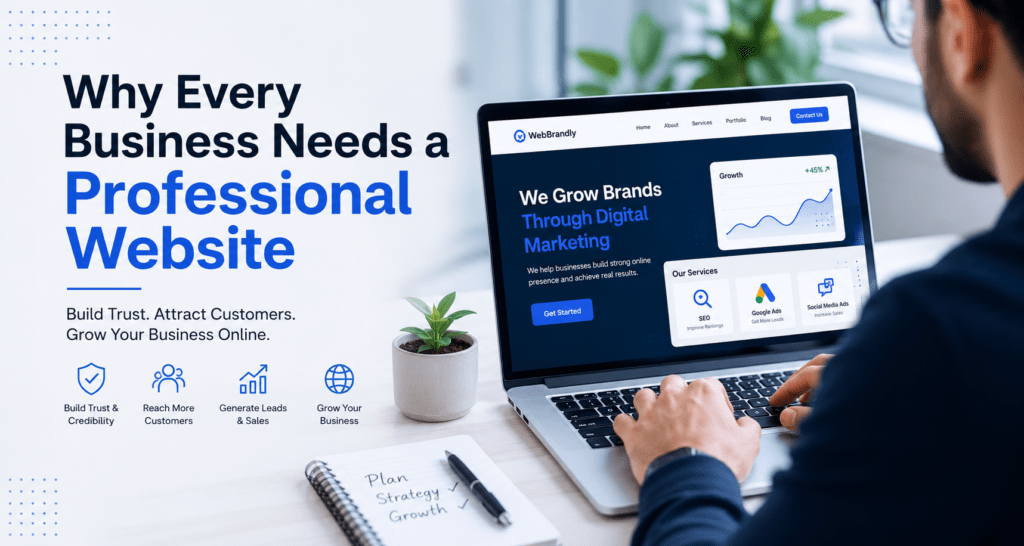
Why Every Business Needs a Professional Website
Why Every Business Needs a Professional Website In today’s digital world, having a professional website is no longer optional—it’s essential. Whether you’re a small local business, a startup, or an established company, your website serves as the foundation of your online presence. Customers now search online before making purchasing decisions, and a professional website helps you make a strong first impression, build credibility, and generate more leads. Your Website Is Your Digital Storefront Imagine a customer hearing about your business for the first time. What’s the first thing they do? Most likely, they’ll search for your business online. If they find a professional, well-designed website, they are more likely to trust your brand. If they can’t find a website or find an outdated one, they may choose a competitor instead. Your website works as a digital storefront that is available 24/7, allowing potential customers to learn about your products, services, pricing, and contact information at any time. Builds Trust and Credibility Trust is one of the most important factors in business success. A professional website helps establish credibility by showcasing your expertise, customer testimonials, case studies, certifications, and portfolio. Consumers expect legitimate businesses to have an online presence. Without a website, potential customers may question the authenticity and professionalism of your business. A well-designed website demonstrates that you are serious about your brand and committed to providing value to your customer Helps You Reach More Customers Unlike a physical store that is limited by location and operating hours, a website allows you to reach customers anywhere and at any time. With the right digital marketing strategies, such as Search Engine Optimization (SEO), Google Ads, and social media marketing, your website can attract visitors who are actively searching for the products or services you offer. This expands your market reach and creates opportunities for consistent business growth. Improves Customer Experience Modern consumers want quick access to information. A professional website makes it easy for visitors to find what they need, whether it’s product details, service information, business hours, pricing, or contact details. Features such as mobile responsiveness, fast loading speed, easy navigation, and clear calls-to-action enhance the user experience and encourage visitors to take action. The easier it is for customers to interact with your business online, the more likely they are to become paying customers. Generates More Leads and Sales One of the biggest advantages of having a professional website is its ability to generate leads and sales. Your website can include: Contact forms ,Lead generation forms ,Appointment booking Supports Your Digital Marketing Efforts Digital marketing campaigns work best when they direct traffic to a professional website. Whether you’re running Google Ads, Meta Ads, email marketing campaigns, or social media promotions, your website acts as the destination where conversions happen. Without a professional website, your marketing efforts may not deliver the desired results because potential customers have nowhere to learn more about your business or take action. Supports Your Digital Marketing Efforts Digital marketing campaigns work best when they direct traffic to a professional website. Whether you’re running Google Ads, Meta Ads, email marketing campaigns, or social media promotions, Helps You Compete Effectively Your competitors are likely investing in their online presence. If your business doesn’t have a professional website, you risk losing customers to competitors who provide a better online experience. A professional website levels the playing field and allows small businesses to compete with larger companies by showcasing their unique value, expertise, and customer service. Provides Valuable Business Insights A website allows you to track and measure customer behavior using tools like Google Analytics. You can monitor: Website traffic Visitor demographics Popular pages Conversion rates User behavior These insights help you make informed business decisions and improve your marketing strategies over time. Mobile Users Expect It A significant percentage of internet traffic comes from mobile devices. Customers expect websites to load quickly and function smoothly on smartphones and tablets. A professional website is designed to provide an excellent mobile experience, ensuring that visitors can easily browse your content regardless of the device they use. Future-Proofs Your Business Technology and consumer behavior continue to evolve. Businesses that invest in a professional website are better prepared to adapt to changing market conditions and customer expectations. A website provides a strong foundation for future growth, allowing you to expand your services, launch online products, integrate new technologies, and scale your business efficiently. Conclusion A professional website is one of the most valuable investments a business can make. It builds trust, increases visibility, generates leads, supports marketing efforts, and helps businesses stay competitive in an increasingly digital marketplace. Whether you’re launching a new business or looking to grow an existing one, a professionally designed website can play a critical role in your success. In today’s digital age, your website is often the first interaction customers have with your brand—make it count. 1. Why is a professional website important for a business? A professional website builds credibility, improves visibility, attracts customers, and helps generate leads and sales. 2. Can a small business benefit from having a website? Yes. A website helps small businesses compete with larger companies, reach more customers, and establish trust online. 3. How does a website help generate leads? A website can collect inquiries through contact forms, lead forms, booking systems, and calls-to-action that encourage visitors to take action. 4. Is social media enough without a website? No. Social media platforms are valuable marketing channels, but a website gives you complete control over your brand, content, and customer experience. 5. What features should a professional website have? A professional website should include mobile responsiveness, fast loading speed, clear navigation, SEO optimization, contact information, and strong calls-to-action. A professional website builds credibility, improves visibility, attracts customers, and helps generate leads and sales. Yes. A website helps small businesses compete with larger companies, reach more customers, and establish trust online. A website can collect